Why Every Healthcare Facility Needs a Patient Management Software Solution?

In the modern fast-paced healthcare environment, medical institutions are increasingly required to deliver quality care without sacrificing operational efficiency. With greater patient volumes and more intricate administrative tasks, healthcare facilities need effective solutions to help streamline their processes. Such a solution is Patient Management Software, which has now become an essential tool for healthcare providers looking to upgrade patient care, improve operational efficiency, and increase overall satisfaction. Patient Management Software Patient Management Software is an all-inclusive system that could automate and simplify the entire process of managing patient data, appointments, medical history, billing, and several other functions within a medical facility. It minimizes human error, removes dull and repetitive tasks, and promotes the smooth flow of information across departments, physicians, and patients. Key Features of Patient Management Software for Healthcare Organizations Improvement in Patient Care Patient Management Software helps a healthcare organization improve patient care. It allows healthcare professionals easy access to a patient’s medical history, treatment plan, and diagnostic results on the same day. Accessing this information immediately, especially in emergency situations, greatly assists healthcare professionals in making critical decisions. Streamlined Administrative Procedures Managing patient records and scheduling appointments can be even laborious for large-sized health facilities. Patient management software eliminates all these forms of administration work, thereby creating an ease of workload, thereby eliminating the risk to a significant extent and, thereby using resources efficiently. Better Communication Better care outcomes result from improved communication between healthcare providers and patients. Patient Management Software enables smooth communication through appointment reminders, test result notifications, and direct messaging between doctors and patients. This connectivity keeps patients more engaged with their treatment plans and makes their experience more positive. Security and Compliance It contains sensitive patient information that the healthcare facility needs to have with the utmost level of privacy and security. Adhering to industry standards like HIPAA, patient management software ensures that all data is stored securely, with access only to the right people. This thus saves patients and healthcare professionals from any potential data breach that could result in legal matters. Effective Billing and Payment Handling Traditional billing practices tend to be time-consuming and prone to errors. In Patient Management Software, there is the integration of features that ensure accurate billing with auto-calculations and speedy payment processing. It limits billing disputes, reduces the cycle time for payment, and generally enhances financial management. Improved Resource Management The patient management software monitors resource usage, including the availability of doctors, equipment, and rooms. This helps prevent bottlenecks and promotes efficient resource allocation, ensuring that patients receive timely care. Read More: Patient Management Software: Enhancing Health Efficiency Why Roojh is a Game-Changer for Healthcare Facilities? Among the patient management software solutions, Roojh is unique for the needs of healthcare facility optimization. It has broad features aimed at satisfying the requirements of healthcare providers and patients. With the help of the Patient Management Software from Roojh, health institutions can streamline operations, increase patient satisfaction, and ease many administrative burdens. It’s a modern solution to the current health care challenges. Conclusion The health industry continues to evolve. And it cannot be ignored as far as competing with others or for their better care goes. Incorporating Patient Management Software becomes a necessity instead of just an option. With the usage of Roojh, efficiency increases in operations, better services are provided for the patient, and work processes within the administrative work is smoothed out. From a single clinic to an extensive health facility, it assists the organizations to run smooth as possible while maintaining standards required, which eventually result in best patient outcomes. If you’re in search of a dependable, all-encompassing, and user-friendly Patient Management Software, consider Roojh as the solution that will take your healthcare practice to new heights.
How a Healthcare Management System Simplifies Hospital Operations

For the modern healthcare industry, many hospitals face challenges in operating efficiently in today’s modern world. Patient scheduling is one such example that can be largely managed with numerous administrative tasks, negatively affecting patient care. This is where a healthcare management system is developed. A healthcare management system streamlines the process, reduces errors, and improves the outcome from patient care by providing a comprehensive and digital platform to deal with all hospital functions. So, join us in the following blog as we discover the ways that a healthcare management system is simplifying hospital operations-and-solve how Roojh will join in redefining the way to transform health management. What Exactly is a Healthcare Management System? Healthcare management systems are software tools that enable various functionalities of a hospital to come together on a single platform-integration of functions like registration of patients, appointment scheduling, billing, inventory management, and medical records into a single unit-creating a complete web bridge solution between various hospital activities. While the impact on hospital staff may appear indirect, in reality, one of the most critical factors—the mechanics of patient interaction—is significantly enhanced by the Hospital Management Information System (HMIS). Specifically, HMIS acts as a vital link in the service delivery chain. In parallel, it empowers end-user groups who directly engage with patients. Moreover, it serves as a tool that effectively translates resource management efforts into meaningful, quality-driven interventions. Benefits of Healthcare Management System 1. Easy Patient Management A healthcare management system enables hospitals to keep full and updated patient records in storage, making it easy for a healthcare professional to locate and track information regarding the patient’s past. Forget long hours going through paper files. Everything is stored digitally with an HMS, reducing errors along with the quickness of information being accessed. Patients benefit from a smoother experience, while developing efficiencies of time in having quick access to medical records, and making appointment scheduling much easier in terms of ensuring that faster care is given without delays. 2. Automated and Simplified Appointment Scheduling Scheduling appointments is one type of activity that hospitals have to undertake in routine. A healthcare management system automatically integrates appointment scheduling, thus eliminating human errors and clashes in schedules. Patients book appointments online and automatically notify both the patients and provider on reminders. This helps reduce no-shows. Further, it ensures that resources are properly allocated in the organization. 3. Simplifying Billing and Payments General billing in hospitals is complicated in itself with multiple departments and insurance providers attached to it. A healthcare management system will obtain such hurdles from complicated billing. It would implement automated invoicing services and payment tracking. Clear and transparent billing allows accurate cost estimations for patients and insurance providers sufficing satisfaction and reducing confusion. Insurance claims are easier to process, yielding faster reimbursements. 4. Inventory Control Hospitals rely heavily on the goods, supplies, equipment, and sometimes drugs. An HMS tracks inventory right up to ensuring medications are always available when needed. Such automation will ensure hospitals avoid shortages and overstocking that could incur unnecessary costs or delays in treatment. How Roojh Enhances Hospital Operations Roojh is an advanced healthcare management system, which helps hospitals organize their functions through a simple interface with very effective features. This is the way Roojh brings uniqueness in every aspect : Total Management of Patients Roojh provides the complete management of all the patients in one place. It keeps all medical records, prescriptions, and test results in one place, easily accessible to the healthcare provider. This will ease the patient care process and will reduce unnecessary duplication of tests or treatments. Effortless Appointment Scheduling This is the most uncomplicated appointment scheduling system through which patients schedule or reschedule their appointments online. It sends automated reminders to patients and reduces no-shows in the hospitals. Straightforward Bills & Payments Automatic bills, payment tracking, and insurance claims for Roojh’s billing module mean less work for administrative staff, much transparency in billing, and a streamlined flow of finance-not only for the hospital but also for patients. Strong Reporting and Analytics With Roojh, one can derive diversified real-time reports of hospital operations concerning everything from patient demographics to financial performance. Such data will ensure informed decisions for efficient hospital management. Read More: How Healthcare Management Systems Enhance Patient Care Conclusion In a nutshell, Roojh can totally replace traditional manual operation of hospitals with a completely automated system. It establishes the clear-cut demarcation between patient care and record keeping through a financial processes streamlining aspect. Roojh is a total benefit for better service in hospitals along with cost cutting and minimizing errors into the system: With the advent of time, hesitation toward adopting a Hospital Management System (HMS) has become increasingly unnecessary. Today, hospitals must embrace such systems to remain competitive, operate efficiently, and deliver the most seamless and satisfying patient care experience. Furthermore, advanced solutions like Roojh enable hospitals to align with modern healthcare practices, ensuring an enhanced experience for both patients and healthcare administrators alike. Ready to maximize your hospital operations? Well, you can check Roojh and see where it can transform your healthcare facility today.
How to Create Your ABHA Account with Aadhaar Card and Mobile Number.
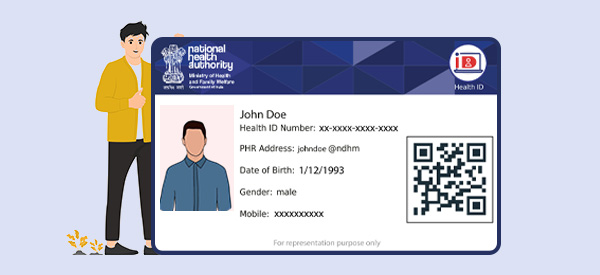
The ABHA (Ayushman Bharat Health Account) is a revolutionary step in India’s healthcare system, allowing individuals to digitize and access their health records securely. The Roojh Health app integrates seamlessly with ABHA, making it easy to create and manage your health account. This guide will walk you through creating an ABHA account using your Aadhaar card or mobile number. Why Should You Create an ABHA Account? An ABHA account allows you to: a) Store and access health records securely.b) Share medical records with healthcare providers digitally.c) Link health records across hospitals, clinics, and labs.d) Manage your health profile conveniently. How to Create an ABHA Account Using Your Aadhaar Card Step 1: Download and Open the Roojh Health App Download the Roojh Health app from the Google Play Store or Apple App Store.Open the app and log in or sign up using your email or phone number. Step 2: Navigate to the ABHA Section Once inside the app, locate the ABHA section on the dashboard.Click on “Create ABHA Account.” Step 3: Choose the Aadhaar Option Select “Using Aadhaar Card” as your preferred method. Step 4: Enter Your Aadhaar Number Input your 12-digit Aadhaar number.Confirm your consent for using Aadhaar for verification. Step 5: Authenticate via OTP An OTP (One-Time Password) will be sent to the mobile number linked to your Aadhaar.Enter the OTP in the app to verify your identity. Step 6: Complete the Registration After verification, the app will auto-fetch details from your Aadhaar.Review and confirm your details. Your ABHA account is now created! How to Create an ABHA Account Using Your Mobile Number Step 1: Open the Roojh Health App Ensure the app is installed on your device and log in. Step 2: Go to the ABHA Section Click on “Create ABHA Account” from the dashboard. Step 3: Choose the Mobile Number Option Select “Using Mobile Number” as the preferred method. Step 4: Enter Your Mobile Number Provide your active mobile number.Confirm your consent to use the number for verification. Step 5: Authenticate via OTP An OTP will be sent to the mobile number you entered.Enter the OTP to verify your phone number. Step 6: Fill in Your Details Manually input your personal details like name, date of birth, and gender.Review and confirm your details. Step 7: Finalize Your ABHA Account Once details are verified, your ABHA account will be successfully created. Read More: Building the Ayushman Bharat Digital Mission Ecosystem Why Use Roojh Health for ABHA Registration? Roojh Health offers an intuitive interface that simplifies ABHA account creation. Additionally, you can; a) Easily manage your health profile.b) Access AI-based health support with the Ask Roojh feature.c) Store and share health information securely. Creating an ABHA account is your gateway to better health management. Whether using your Aadhaar card or mobile number, Roojh Health makes the process quick and secure. Download the app today and take a step toward digitizing your healthcare journey!
Building the Ayushman Bharat Digital Mission Ecosystem.
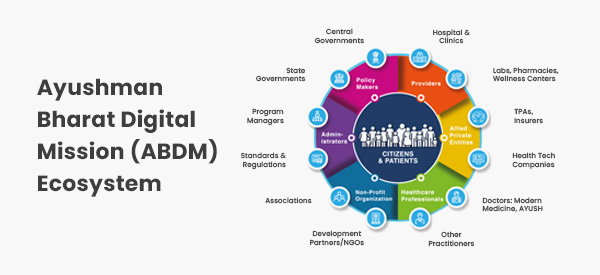
The Ayushman Bharat Digital Mission (ABDM) is transforming India’s healthcare sector by creating a robust digital health ecosystem. Launched by the Government of India, ABDM aims to bridge gaps in the healthcare system and enable a seamless, inclusive, and accessible healthcare experience for all citizens. This blog explores the building blocks, benefits, and future potential of the ABDM ecosystem. What is Ayushman Bharat Digital Mission (ABDM)? ABDM envisions a unified digital infrastructure for healthcare, providing every citizen with a unique Ayushman Bharat Health Account (ABHA). The ecosystem is designed to integrate various stakeholders such as hospitals, laboratories, insurance companies, and healthcare start-ups into a cohesive platform for: a) Digital health record managementb) Secure data sharingc) Real-time healthcare insightsd) Better doctor-patient interactions Building Blocks of the ABDM Ecosystem Digital Health IDs (ABHA) The foundation of ABDM is the creation of a unique ABHA ID for individuals, enabling them to access and manage their health records digitally. Health Facility Registry (HFR) This is a comprehensive registry of all public and private healthcare facilities, ensuring transparency and accessibility. Healthcare Professional Registry (HPR) A digital repository of verified healthcare professionals, fostering trust and enabling patients to choose the right specialists. Unified Health Interface (UHI) A platform that connects patients, doctors, and other healthcare providers for secure data exchange and online consultations. Benefits of the ABDM Ecosystem 1.Empowered Citizens Patients can securely store, access, and share their health records anytime, anywhere, enabling informed decision-making about their health. 2.Streamlined Healthcare Services With all stakeholders digitally connected, processes such as doctor consultations, prescription sharing, and lab test results become faster and more efficient. 3.Data-Driven Insights The vast repository of anonymized health data can drive research and innovation, enabling the government to craft better policies. 4.Enhanced Accessibility Rural and underserved areas can access telemedicine services, ensuring equitable healthcare delivery. 5.Cost Efficiency By digitizing operations and reducing redundancies, the ecosystem minimizes healthcare costs for both providers and patients. Read More: How to Create Your ABHA Account with Aadhaar Card and Mobile Number Conclusion The Ayushman Bharat Digital Mission is a revolutionary step towards creating a connected and transparent healthcare ecosystem in India. With its focus on inclusivity, accessibility, and digital innovation, ABDM is set to transform how healthcare is delivered and experienced. Building this ecosystem requires the collective effort of all stakeholders to ensure a healthier and more prosperous India. Embracing the ABDM ecosystem is not just about technological advancement—it is about empowering individuals and ensuring quality healthcare for every citizen. Let’s take this transformative journey together for a healthier tomorrow!
Exploring Mindfulness Techniques: For a Calmer, More Focused Life

In today’s fast-paced world, stress has become an inevitable part of our lives. Whether it’s juggling work deadlines, family responsibilities, or personal challenges, our mental well-being often takes a backseat. Mindfulness is an effective way to counteract stress, enhance focus, and promote emotional balance. This blog explores mindfulness techniques such as meditation and deep breathing exercises, ways to practice mindfulness in everyday activities, and valuable tips for managing stress. Mindfulness Techniques – Meditation and Deep Breathing Meditation: The Art of Centring Your Mind Meditation is one of the most effective ways to practice mindfulness. It involves sitting quietly, focusing on your breath, and bringing your awareness to the present moment. Even a few minutes of meditation daily can: a) Reduce stress and anxiety.b) Improve focus and concentration.c) Enhance emotional well-being. How to Start Meditating a) Find a quiet space where you won’t be disturbed.b) Sit comfortably with your back straight.c) Close your eyes and take slow, deep breaths.d) Focus on your breath. If your mind wanders, gently bring your focus back. Deep Breathing Exercises: A Quick Stress Reliever Deep breathing is a simple yet powerful mindfulness tool. It helps calm your nervous system and brings your attention back to the present. Technique: Box Breathing a) Inhale deeply for 4 seconds.b) Hold your breath for 4 seconds.c) Exhale slowly for 4 seconds.d) Pause for 4 seconds before repeating. Mindfulness in Everyday Activities Mindfulness isn’t confined to meditation sessions. You can incorporate it into your daily life through simple activities. 1.Mindful Eating Instead of rushing through meals, take time to savor each bite. Pay attention to the flavors, textures, and aromas of your food. 2.Mindful Walking Take a walk outdoors and focus on the sensation of your feet hitting the ground, the sound of birds, or the rustling of leaves. 3.Mindful Conversations Be fully present when speaking with someone. Listen attentively without planning your next response. Tips for Managing Stress with Mindfulness Start Small – Begin with just five minutes a day. Gradually increase the time as you get more comfortable. Create a Routine – Set a specific time for your mindfulness practice, such as in the morning or before bed. Be Patient – Mindfulness is a skill that improves over time. Don’t be discouraged if your mind wanders frequently in the beginning. Read More: Roojh: the All-In-One Hospital Management System Conclusion Practicing mindfulness doesn’t require major lifestyle changes or special tools. It’s about making a conscious effort to stay present and appreciate the moment. By incorporating meditation, deep breathing exercises, and everyday mindfulness into your routine, you can significantly reduce stress and improve your overall quality of life. Start small, stay consistent, and watch how these practices transform your mental and emotional well-being.